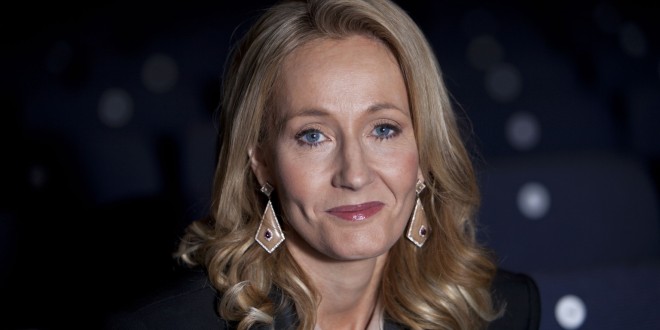
In the time since Rowling’s tweets from June 6, 2020, a number of Wizarding World stars have issued responses affirming trans people. These include Daniel Radcliffe, Eddie Redmayne, and Emma Watson, amongst others.
Today, Rowling published a piece to her website offering further explanation of her stance on “sex and gender issues.”
As a trans woman who grew up with the Harry Potter books and movies, it’s hard to ignore the statements of Rowling–especially when her comments are targeted toward me and others like me. That’s why I’m writing another breakdown of and response to her post. Hopefully others (and maybe Rowling herself) can find some value in this.
As with her tweets, I’m going to be breaking down her post bit-by-bit, so please bear with me here. It’s the only way I can see to do this analysis justice.
This isn’t an easy piece to write, for reasons that will shortly become clear, but I know it’s time to explain myself on an issue surrounded by toxicity. I write this without any desire to add to that toxicity.
For people who don’t know: last December I tweeted my support for Maya Forstater, a tax specialist who’d lost her job for what were deemed ‘transphobic’ tweets. She took her case to an employment tribunal, asking the judge to rule on whether a philosophical belief that sex is determined by biology is protected in law. Judge Tayler ruled that it wasn’t.
OK, so there’s already a lot to unpack here. Maya Forstater is someone made famous/infamous due to some tweets she made in September 2018. There’s quite a few tweets to sift through, but essentially they’re her opinions on various transgender-related topics. It seemed sparked by a discussion on the UK government’s reform of the Gender Recognition Act. Forstater’s tweets didn’t sit well with her employer and so they eventually opted not to renew her contract. (Note: As far as I can tell, she was not fired. Her contract was simply not renewed.)
Forstater then went to court saying her employer didn’t have the right to make such a decision based on her views. According to Forstater, her voicing of opinion was within her right and should not have impacted her employment. However, the judge disagreed.
It’s at this point that Rowling stepped into the picture and tweeted her support for Forstater.
There’s too much to talk about here for this blog post, but I will voice my opinion that Forstater was in the wrong. I’m not intimately familiar with UK employment laws, but I’m pretty sure in the US, no reason needs to be given when an employer chooses not to renew a contract with an employee. Regardless of what view Forstater expressed, she didn’t have the right to keep a contracted position in perpetuity. The employer was well within their rights to let the contract lapse.
My interest in trans issues pre-dated Maya’s case by almost two years, during which I followed the debate around the concept of gender identity closely. I’ve met trans people, and read sundry books, blogs and articles by trans people, gender specialists, intersex people, psychologists, safeguarding experts, social workers and doctors, and followed the discourse online and in traditional media. On one level, my interest in this issue has been professional, because I’m writing a crime series, set in the present day, and my fictional female detective is of an age to be interested in, and affected by, these issues herself, but on another, it’s intensely personal, as I’m about to explain.
I’m curious what exactly Rowling is talking about here. The only crime series she has written is the Cormoran Strike series under the pseudonym Robert Galbraith. And as far as I know, the only transgender character in the series was in the 2014 novel, The Silkworm. That would be far more than “almost two years.” Is there a yet-to-be published Rowling novel that will include something trans-related? Given the treatment of her trans character in The Silkworm, I’m a bit concerned about that prospect…
All the time I’ve been researching and learning, accusations and threats from trans activists have been bubbling in my Twitter timeline. This was initially triggered by a ‘like’. When I started taking an interest in gender identity and transgender matters, I began screenshotting comments that interested me, as a way of reminding myself what I might want to research later. On one occasion, I absent-mindedly ‘liked’ instead of screenshotting. That single ‘like’ was deemed evidence of wrongthink, and a persistent low level of harassment began.
At the time of her “liking” this tweet, Rowling’s spokesperson said, “It was a mistake. I’m afraid J.K. Rowling had a clumsy and middle-aged moment and this is not the first time she has favourited by holding her phone incorrectly!”
While this was a somewhat reasonable answer for the public to hear, it’s understandable that doubt would emerge. One might wonder why J.K. Rowling was reading such tweets in the first place. It would have made sense for Rowling to definitively say she didn’t agree with the “Men in dresses” part of this tweet and put this alleged harassment to rest. And yet, she didn’t do that. I think this post I’m dissecting is slowly revealing why…
Months later, I compounded my accidental ‘like’ crime by following Magdalen Burns on Twitter. Magdalen was an immensely brave young feminist and lesbian who was dying of an aggressive brain tumour. I followed her because I wanted to contact her directly, which I succeeded in doing. However, as Magdalen was a great believer in the importance of biological sex, and didn’t believe lesbians should be called bigots for not dating trans women with penises, dots were joined in the heads of twitter trans activists, and the level of social media abuse increased.
I mention all this only to explain that I knew perfectly well what was going to happen when I supported Maya. I must have been on my fourth or fifth cancellation by then. I expected the threats of violence, to be told I was literally killing trans people with my hate, to be called cunt and bitch and, of course, for my books to be burned, although one particularly abusive man told me he’d composted them.
Is it really necessary for you to play the victim here? Why are you using the hyperbole of saying “my accidental ‘like’ crime” as if you were being burned at the stake for it? People simply wanted you to deny your transphobia and you remained silent (to my knowledge).
And OK. So you’re saying you agreed with Burns and the beliefs she espoused online? Because there’s no sugarcoating it: Burns was definitely transphobic. A quick scan through her Twitter feed shows that she felt lesbians couldn’t have penises, that non-binary people are not valid, that trans women are invading women’s spaces … etc. I could spend the time refuting these viewpoints one by one, but within this post, I’m trying to stick to Rowling’s stated views so I’ll leave this be for now. I’ll just say that supporting a known transphobe puts you on their level, just as supporting a racist would have the same effect. If you received negative comments for your support of Burns, it was more-or-less justified.
You say you weren’t killing trans people with your hate. But, the harsh truth is that hate can be all it takes to kill someone. When enough people publicly invalidate you, it can be easy to become suicidal. It’s hard enough to overcome society’s expectations when you’re transgender, but to be invalidated by a public icon like J.K. Rowling? That can sting to your core. I should know. I’m feeling it right now.
What I didn’t expect in the aftermath of my cancellation was the avalanche of emails and letters that came showering down upon me, the overwhelming majority of which were positive, grateful and supportive. They came from a cross-section of kind, empathetic and intelligent people, some of them working in fields dealing with gender dysphoria and trans people, who’re all deeply concerned about the way a socio-political concept is influencing politics, medical practice and safeguarding. They’re worried about the dangers to young people, gay people and about the erosion of women’s and girl’s rights. Above all, they’re worried about a climate of fear that serves nobody – least of all trans youth – well.
I’d stepped back from Twitter for many months both before and after tweeting support for Maya, because I knew it was doing nothing good for my mental health. I only returned because I wanted to share a free children’s book during the pandemic. Immediately, activists who clearly believe themselves to be good, kind and progressive people swarmed back into my timeline, assuming a right to police my speech, accuse me of hatred, call me misogynistic slurs and, above all – as every woman involved in this debate will know – TERF.
Question for you: How many transgender people showered you with support at this point? Because we were the group feeling targeted. We were, and are, the people who are actually being hurt by your language.
And what do you think your tweets are doing for the mental health of transgender people the world over? You are the famous, powerful, rich, cisgender, white person here. You are the one who could have just ignored the comments that took things too far. And instead of calling out specific actions of hatred, you issue a blanket statement placing most of the blame on transgender activists. Way to go.
If you didn’t already know – and why should you? – ‘TERF’ is an acronym coined by trans activists, which stands for Trans-Exclusionary Radical Feminist. In practice, a huge and diverse cross-section of women are currently being called TERFs and the vast majority have never been radical feminists. Examples of so-called TERFs range from the mother of a gay child who was afraid their child wanted to transition to escape homophobic bullying, to a hitherto totally unfeminist older lady who’s vowed never to visit Marks & Spencer again because they’re allowing any man who says they identify as a woman into the women’s changing rooms. Ironically, radical feminists aren’t even trans-exclusionary – they include trans men in their feminism, because they were born women.
But accusations of TERFery have been sufficient to intimidate many people, institutions and organisations I once admired, who’re cowering before the tactics of the playground. ‘They’ll call us transphobic!’ ‘They’ll say I hate trans people!’ What next, they’ll say you’ve got fleas? Speaking as a biological woman, a lot of people in positions of power really need to grow a pair (which is doubtless literally possible, according to the kind of people who argue that clownfish prove humans aren’t a dimorphic species).
I will give you this. TERF does tend to be misused. Many people who are called TERFs could not care less about feminism.
But what on earth are these examples you’re pulling out of thin air? Are we supposed to know these people you’re talking about? How can you assume this child is a cisgender gay person and not a straight transgender person? This is such a common misconception that I’m sure most transgender people are familiar with it. A cis person will insist a trans person is actually just gay, but they can’t deal with either their internalized homophobia or society’s homophobia, so they feel the need to transition. Newsflash: Transitioning has way more stigma than being gay. Plus, why can’t you trust what somebody says about themselves? Children usually develop a consistent sense of gender identity between the ages of 4 and 7. If the child is at least 7, then I see no reason to doubt their ability to tell us if they’re transgender.
If a person, institution, or organization is called out as being transphobic … they’re probably actually transphobic. Don’t be mad about bigotry being rightfully pointed out.
And that last sentence is so ridiculously childish that I’m not even going to give it a proper response.
So why am I doing this? Why speak up? Why not quietly do my research and keep my head down?
Well, I’ve got five reasons for being worried about the new trans activism, and deciding I need to speak up.
Firstly, I have a charitable trust that focuses on alleviating social deprivation in Scotland, with a particular emphasis on women and children. Among other things, my trust supports projects for female prisoners and for survivors of domestic and sexual abuse. I also fund medical research into MS, a disease that behaves very differently in men and women. It’s been clear to me for a while that the new trans activism is having (or is likely to have, if all its demands are met) a significant impact on many of the causes I support, because it’s pushing to erode the legal definition of sex and replace it with gender.
My primary question is actually, “Why now?” You realize it’s Pride month, right? And the world kind of has other issues that are rightfully taking priority? You know, the pandemic? Economic downturns? Black people being murdered? Ringing any bells? This is one of the worst times you could have turned the spotlight toward you.
Moving on … here Rowling is talking about The Volant Charitable Trust. And I’m not sure I see the relevancy of transgender people and trying to help women and children. There are transgender women and children and, if anything, they experience more social deprivation in life than cisgender women and children. Transgender people can also be prisoners and survivors of abuse.
In terms of MS research … have you actually talked to medical professionals about your concerns? Because, correct me if I’m wrong, but MS doesn’t have different symptoms for different sexes. It has different rates of occurrence, sure. But apparently that has to do with testosterone and estrogen…not sex or gender or anything. So to properly conduct research, every participant would need their hormone levels checked regardless of their gender identity, right?
The second reason is that I’m an ex-teacher and the founder of a children’s charity, which gives me an interest in both education and safeguarding. Like many others, I have deep concerns about the effect the trans rights movement is having on both.
Um…OK? How does the trans rights movement affect education or protecting kids?
The third is that, as a much-banned author, I’m interested in freedom of speech and have publicly defended it, even unto Donald Trump.
Good job speaking up to a widely hated person who is frequently criticized by most decent people. You’re so special.
The fourth is where things start to get truly personal. I’m concerned about the huge explosion in young women wishing to transition and also about the increasing numbers who seem to be detransitioning (returning to their original sex), because they regret taking steps that have, in some cases, altered their bodies irrevocably, and taken away their fertility. Some say they decided to transition after realising they were same-sex attracted, and that transitioning was partly driven by homophobia, either in society or in their families.
Do you want to know why there are suddenly so many transgender people (of all genders)? Because we all finally feel safe enough to come out of the closet and transition. Who would have thought?
And OK, let’s say there are more people detransitioning than ever. Let’s take a wild guess why. Um…probably because there are more people transitioning than ever before? The number of people who detransition is naturally going to go up even if the percentage stays low. And the percentage does seem to be low. An analysis of UK medical records from August 2016 to August 2017 found that of 3,398 transgender patients, 16 mentioned regret or detransition. 12 stated it was due to social pressure, while 3 detransitioned with no intention to transition again. Those 3 people equals 0.088% of people sampled. Whatever way you slice the numbers, that’s over 99% of patients who express no regret over transitioning. I would say that’s a passing success rate, wouldn’t you? And the study results even say, “Study findings are consistent with previous research showing low rates of detransition. Detransition was most often prompted by social difficulties rather than changes in gender identity or physical complications and was most often temporary.”
Want more data about transition regret? One study found that “regret after gender-affirming surgery is an exceedingly rare event.” Another study found that “the percentage of people who regretted gonadectomy remained small and did not show a tendency to increase.”
Unfortunately, I’m having trouble finding many more peer-reviewed studies on detransition rates or transition regret. Probably because studies on transgender people are shockingly rare considering how much there is to learn. Wouldn’t it be amazing if a charitable trust could help make these studies a reality? Hmmm….
And seriously? You’re bringing up homophobia again? If it’s such a big issue, maybe we should be focusing on eradicting homophobia instead of stigmatizing transgender people.
Most people probably aren’t aware – I certainly wasn’t, until I started researching this issue properly – that ten years ago, the majority of people wanting to transition to the opposite sex were male. That ratio has now reversed. The UK has experienced a 4400% increase in girls being referred for transitioning treatment. Autistic girls are hugely overrepresented in their numbers.
Again, ten years ago most people didn’t feel safe transitioning or have the ability to transition. Hence the large increase. That may also explain why the gender ratio is changing. It’s frequently acknowledged by the transgender community that it’s easier to “pass” (be seen as your gender) if you’re a transgender man than if you’re a transgender woman. That’s because testosterone does a lot of heavy lifting, and its effect on voice, facial hair, and muscle mass all help immensely with the ability to pass. Meanwhile, transgender women who have gone through male puberty don’t experience voice changes or total loss of facial hair when switching from testosterone to estrogen. So this “ease of access” to passing is possibly why there are more and more transgender men. There are a good number of transgender women who stay in the closet because they fear they will never pass without cosmetic surgery.
And I’m not able to find a source for your specific autism data. But it feels like you’re implying autistic girls are being misled to think they’re transgender boys, correct? Hence the “hugely overrepresented,” as if there’s no good explanation for this. But the thing is, there is evidence to suggest that having autism and being transgender do have a correlation. And that the overlap seems to be greater in trans men than trans women. It doesn’t seem like the scientific community knows why these correlations exist, but given the potential causes of autism and being transgender, it’s possible genetics are influencing both.
The same phenomenon has been seen in the US. In 2018, American physician and researcher Lisa Littman set out to explore it. In an interview, she said:
‘Parents online were describing a very unusual pattern of transgender-identification where multiple friends and even entire friend groups became transgender-identified at the same time. I would have been remiss had I not considered social contagion and peer influences as potential factors.’
Littman mentioned Tumblr, Reddit, Instagram and YouTube as contributing factors to Rapid Onset Gender Dysphoria, where she believes that in the realm of transgender identification ‘youth have created particularly insular echo chambers.’
Her paper caused a furore. She was accused of bias and of spreading misinformation about transgender people, subjected to a tsunami of abuse and a concerted campaign to discredit both her and her work. The journal took the paper offline and re-reviewed it before republishing it. However, her career took a similar hit to that suffered by Maya Forstater. Lisa Littman had dared challenge one of the central tenets of trans activism, which is that a person’s gender identity is innate, like sexual orientation. Nobody, the activists insisted, could ever be persuaded into being trans.
Dr. Lisa Littman is a physician and researcher and is currently an assistant professor at Brown University. Here is a link to the paper she wrote.
There are a few things I should point out about this research paper. First, it’s that it was only an observational study of what parents noticed. No data was collected from the kids or from clinicians. Second, the term “rapid-onset gender dysphoria” is not a formal mental health diagnosis. Until the kids themselves are studied, this term is basically just a guess at what might be happening. Third, the study only set out to generate a hypothesis, not to test a hypothesis. So, again, the study was just making observations and speculating from there. We really don’t know much of anything yet.
Now, I can see how there could easily be confusion over what’s happening here. It can look like young, impressionable people start talking with one another and become convinced they’re transgender. But here’s my personal experience: I started consciously noticing a disconnect between my gender identity and my body in middle school–right when I would have been starting puberty. I didn’t know what to make of these feelings so I went to the internet in search of answers. Over the course of many years, as transgender knowledge became more widespread, I was able to piece together who I was thanks to internet forums. I wasn’t persuaded into being trans. I was given the tools to name my thoughts and feelings.
I would bet good money that this is what is happening when researchers see “rapid-onset gender dysphoria.” Puberty is when your body starts changing, and for transgender people, it’s a source of panic and anxiety. Hence why it seems sudden. Friend groups becoming trans identifying all at once is also easy to explain. Similar people tend to make friends with one another, so it wouldn’t be surprising to have in-the-closet transgender people become friends with similarly minded people. And because there’s a lot less stigma around being transgender, these friends feel comfortable sharing how they feel and the information they find. That would be why they all seem to become transgender at once. Nobody is being persuaded they’re trans. They’re just all taking the same journey together.
The argument of many current trans activists is that if you don’t let a gender dysphoric teenager transition, they will kill themselves. In an article explaining why he resigned from the Tavistock (an NHS gender clinic in England) psychiatrist Marcus Evans stated that claims that children will kill themselves if not permitted to transition do not ‘align substantially with any robust data or studies in this area. Nor do they align with the cases I have encountered over decades as a psychotherapist.’
Here is the article Rowling is referencing.
And here are studies that refute Evans’ statement:
- A study published in February 2020 found that transgender adults who received puberty blockers as teenagers had less lifetime suicidal ideation than transgender adults who didn’t have access to this treatment as teens.
- A study published in March 2018 found that transgender youth who were able to use their chosen name in multiple contexts had reduced depression, suicidal ideation, and suicidal behavior.
- A meta-analysis of studies published between January 2011 and March 2016 found that gender-affirming medical therapy and supported social transition in childhood have been shown to correlate with improved psychological functioning for gender-variant children and adolescents.
- A study published in 2015 found that transgender youth who lived in their felt gender full time were almost 50% more likely to report good or excellent mental health. The study also found that trans youth who had supportive adults both inside and outside their family were four times more likely to report good or excellent mental health, and were far less likely to have considered suicide.
Should I go on?
The writings of young trans men reveal a group of notably sensitive and clever people. The more of their accounts of gender dysphoria I’ve read, with their insightful descriptions of anxiety, dissociation, eating disorders, self-harm and self-hatred, the more I’ve wondered whether, if I’d been born 30 years later, I too might have tried to transition. The allure of escaping womanhood would have been huge. I struggled with severe OCD as a teenager. If I’d found community and sympathy online that I couldn’t find in my immediate environment, I believe I could have been persuaded to turn myself into the son my father had openly said he’d have preferred.
Are you saying you’ve experienced gender dysphoria? If so, then I see nothing wrong with the prospect of you transitioning. But to make sure we’re on the same page here, here’s how the Diagnostic and Statistical Manual of Mental Disorders Fifth Edition (DSM-5) describes gender dysphoria…
A. A marked incongruence between one’s experienced/expressed gender and assigned gender, of at least 6 months’ duration, as manifested by at least two of the following:
- A marked incongruence between one’s experienced/expressed gender and primary and/or secondary sex characteristics.
- A strong desire to be rid of one’s primary and/or secondary sex characteristics because of a marked incongruence with one’s experienced/expressed gender.
- A strong desire for the primary and/or secondary sex characteristics of the other gender.
- A strong desire to be of the other gender (or some alternative gender different from one’s assigned gender).
- A strong desire to be treated as the other gender (or some alternative gender different from one’s assigned gender).
- A strong conviction that one has the typical feelings and reactions of the other gender (or some alternative gender different from one’s assigned gender).
B. The condition is associated with clinically significant distress or impairment in social, occupational, or other important areas of functioning.
Now, I don’t know how the UK diagnoses gender dysphoria, but the DSM-5 is essentially the mental health diagnosis bible in America. Without a diagnosis that fits the criteria above, a person won’t receive transgender medical care. That makes the concept of a cisgender woman transitioning to escape womanhood a lot less likely.
And from what I do know about how the UK handles transgender care, there’s an even less likely possibility a cisgender person would transition and regret it. Before receiving clinical care, most National Health Service trusts require two years of real-life experience. This means a person wanting hormones has to publicly present as their felt gender for two whole years before anything can happen medically. If you went through that and proceeded to start taking testosterone, I’d say you probably are transgender.
Also, how does the tale you’re weaving relate to transgender women? You realize transgender women give up their male privileges when they transition, right? And that we deal with misogyny, glass ceilings, and all the other fun societal bullshit cisgender women experience, right? You’re trying to invalidate trans men with your tale, but it falls apart when applied to other transgender people.
When I read about the theory of gender identity, I remember how mentally sexless I felt in youth. I remember Colette’s description of herself as a ‘mental hermaphrodite’ and Simone de Beauvoir’s words: ‘It is perfectly natural for the future woman to feel indignant at the limitations posed upon her by her sex. The real question is not why she should reject them: the problem is rather to understand why she accepts them.’
As I didn’t have a realistic possibility of becoming a man back in the 1980s, it had to be books and music that got me through both my mental health issues and the sexualised scrutiny and judgement that sets so many girls to war against their bodies in their teens. Fortunately for me, I found my own sense of otherness, and my ambivalence about being a woman, reflected in the work of female writers and musicians who reassured me that, in spite of everything a sexist world tries to throw at the female-bodied, it’s fine not to feel pink, frilly and compliant inside your own head; it’s OK to feel confused, dark, both sexual and non-sexual, unsure of what or who you are.
I would hope that everybody at this point realizes femininity does not equal female and masculinity does not equal male. Women don’t have to like pink or grow out their hair. And men don’t have to like blue or keep their hair short. Gender also shouldn’t impact how sexual you feel or how much emotion you feel you can express.
But if you’re genuinely experiencing incongruency with your gender as the DSM-5 outlines above, then it’s also OK to be transgender. Maybe there’s a lot more transgender people than we realize, huh? Would there be a problem if that was true?
I want to be very clear here: I know transition will be a solution for some gender dysphoric people, although I’m also aware through extensive research that studies have consistently shown that between 60-90% of gender dysphoric teens will grow out of their dysphoria. Again and again I’ve been told to ‘just meet some trans people.’ I have: in addition to a few younger people, who were all adorable, I happen to know a self-described transsexual woman who’s older than I am and wonderful. Although she’s open about her past as a gay man, I’ve always found it hard to think of her as anything other than a woman, and I believe (and certainly hope) she’s completely happy to have transitioned. Being older, though, she went through a long and rigorous process of evaluation, psychotherapy and staged transformation. The current explosion of trans activism is urging a removal of almost all the robust systems through which candidates for sex reassignment were once required to pass. A man who intends to have no surgery and take no hormones may now secure himself a Gender Recognition Certificate and be a woman in the sight of the law. Many people aren’t aware of this.
Do you realize how outdated your information is? That statistic you’re citing is based on flawed studies. They were based on old standards and many of the children in these studies wouldn’t qualify as having gender dysphoria under modern guidelines. To parrot this statistic to the world as a fact when you haven’t double-checked its relevancy is troubling.
And why are you so insistent on gatekeeping transgender people? I’m constantly thankful that my state doesn’t require “real-life experience” to change my legal gender. Without hormones, I would have faced terrible embarrassment, harassment, and discrimination if I tried to present as a female every day for two straight years. Starting hormone therapy first and then socially transitioning was the best possible option for my mental health and I’m a thousand times grateful that I had it so relatively “easy.”
And what is this nonsense about cis men becoming woman in the sight of the law?? Are you seriously saying cisgender men do this so they can freely harass women in women’s spaces? You realize if a cisgender man is going to illegally harass a woman, he isn’t going to go through the hassle and social estrangement of changing his legal gender, right? What world are you living in? Show me actual examples of cisgender men actually changing their legal gender to do this kind of thing. Go ahead. I’m waiting.
We’re living through the most misogynistic period I’ve experienced. Back in the 80s, I imagined that my future daughters, should I have any, would have it far better than I ever did, but between the backlash against feminism and a porn-saturated online culture, I believe things have got significantly worse for girls. Never have I seen women denigrated and dehumanised to the extent they are now. From the leader of the free world’s long history of sexual assault accusations and his proud boast of ‘grabbing them by the pussy’, to the incel (‘involuntarily celibate’) movement that rages against women who won’t give them sex, to the trans activists who declare that TERFs need punching and re-educating, men across the political spectrum seem to agree: women are asking for trouble. Everywhere, women are being told to shut up and sit down, or else.
Oh my God. I don’t know how to respond to this. You’re seriously suggesting women have it worse than they did 40 years ago? And you’re also espousing the misled belief that porn hurts women? Go read some actual scientific studies before you spout your nonsense.
I 100% agree with you about America’s president. But please read my previous post and this post before you continue defending the idea of TERFs.
I’ve read all the arguments about femaleness not residing in the sexed body, and the assertions that biological women don’t have common experiences, and I find them, too, deeply misogynistic and regressive. It’s also clear that one of the objectives of denying the importance of sex is to erode what some seem to see as the cruelly segregationist idea of women having their own biological realities or – just as threatening – unifying realities that make them a cohesive political class. The hundreds of emails I’ve received in the last few days prove this erosion concerns many others just as much. It isn’t enough for women to be trans allies. Women must accept and admit that there is no material difference between trans women and themselves.
Biology is still important. It’s just that “womanhood = your biology” can no longer truthfully be seen as accurate. Cisgender women aren’t being put down by saying transgender men also menstruate. And cisgender women also aren’t being hurt by being inclusive of transgender women. The world isn’t as black and white as it used to seem, Rowling. But you’ll have to get used to it. The reality is that cisgender women and transgender men have shared biological experiences and that cisgender women and transgender women have shared social experiences. Being exclusive is only hurting all of us.
But, as many women have said before me, ‘woman’ is not a costume. ‘Woman’ is not an idea in a man’s head. ‘Woman’ is not a pink brain, a liking for Jimmy Choos or any of the other sexist ideas now somehow touted as progressive. Moreover, the ‘inclusive’ language that calls female people ‘menstruators’ and ‘people with vulvas’ strikes many women as dehumanising and demeaning. I understand why trans activists consider this language to be appropriate and kind, but for those of us who’ve had degrading slurs spat at us by violent men, it’s not neutral, it’s hostile and alienating.
Do you have any idea how deeply offensive this is? You’re implying transgender women see being a woman as a costume or simply an idea. It’s our identity. A transgender woman is a woman. Not a woman with an asterisk and disclaimer at the bottom. A woman. Full-stop. Stop acting like we’re pretending and tricking you. And gender stereotypes do not equal gender identity. Stop spreading nonsense.
Oh, is it dehumanizing and demeaning to use the terminology “menstruators” and “people with vulvas”? Are you saying it’s more humanizing to say “women” and make transgender people who menstruate and cisgender women who can’t menstruate feel like invalidated garbage? It’s clinical and accurate to use the terms you quoted. Not dehumanizing. Nobody is reducing women to body parts. We’re simply being as accurate as humanly possible. That’s the humanizing route to take.
By the way, which violent men have spat at you the terms “menstruator” or “person with a vulva”? I’d love to know which men have such a clinical style of hurling insults.
Which brings me to the fifth reason I’m deeply concerned about the consequences of the current trans activism.
I’ve been in the public eye now for over twenty years and have never talked publicly about being a domestic abuse and sexual assault survivor. This isn’t because I’m ashamed those things happened to me, but because they’re traumatic to revisit and remember. I also feel protective of my daughter from my first marriage. I didn’t want to claim sole ownership of a story that belongs to her, too. However, a short while ago, I asked her how she’d feel if I were publicly honest about that part of my life, and she encouraged me to go ahead.
I’m mentioning these things now not in an attempt to garner sympathy, but out of solidarity with the huge numbers of women who have histories like mine, who’ve been slurred as bigots for having concerns around single-sex spaces.
I’m sorry you had that experience. Nobody deserves domestic abuse or sexual assault. Please know that I feel genuine sympathy for you.
But I also have to be honest when I say I fail to see the correlation between transgender people and safe spaces for women. Transgender women are not men. To exclude them from a space they have a genuine need for is plain discrimination. Is there something I’m missing here? What does our assigned sex at birth have to do with this? If I was a victim of domestic abuse, I would want to attend a safe space with other women who had such an experience. Why exclude me because I’m a transgender woman? Are you afraid of men masquerading as women? Again, where is this happening? If a man truly intended to infiltrate a safe space for women, he would do so regardless of the laws regarding transgender people.
I managed to escape my first violent marriage with some difficulty, but I’m now married to a truly good and principled man, safe and secure in ways I never in a million years expected to be. However, the scars left by violence and sexual assault don’t disappear, no matter how loved you are, and no matter how much money you’ve made. My perennial jumpiness is a family joke – and even I know it’s funny – but I pray my daughters never have the same reasons I do for hating sudden loud noises, or finding people behind me when I haven’t heard them approaching.
If you could come inside my head and understand what I feel when I read about a trans woman dying at the hands of a violent man, you’d find solidarity and kinship. I have a visceral sense of the terror in which those trans women will have spent their last seconds on earth, because I too have known moments of blind fear when I realised that the only thing keeping me alive was the shaky self-restraint of my attacker.
I’m so glad that you’re in a better place now and are with a person who makes you feel safe. And I’m sorry you’re still experiencing the residual effects of your abuse.
Thank you for your feelings of solidarity and kinship.
I believe the majority of trans-identified people not only pose zero threat to others, but are vulnerable for all the reasons I’ve outlined. Trans people need and deserve protection. Like women, they’re most likely to be killed by sexual partners. Trans women who work in the sex industry, particularly trans women of colour, are at particular risk. Like every other domestic abuse and sexual assault survivor I know, I feel nothing but empathy and solidarity with trans women who’ve been abused by men.
So I want trans women to be safe. At the same time, I do not want to make natal girls and women less safe. When you throw open the doors of bathrooms and changing rooms to any man who believes or feels he’s a woman – and, as I’ve said, gender confirmation certificates may now be granted without any need for surgery or hormones – then you open the door to any and all men who wish to come inside. That is the simple truth.
Your first paragraph here is on point. Thank you for seeing that we pose no threat.
But your second paragraph here is where you miss the point. Allowing genuine transgender women and girls in female bathrooms poses you no greater threat than letting cisgender women and girls inside these bathrooms. You mention “any man who believes or feels he’s a woman.” If this “man” genuinely feels this way, then this person is actually a transgender woman and is as valid as any other woman.
But it sounds like what you really mean is cisgender men who pretend they’re transgender women. Again … where is this bogeyman you’re describing? Who are these cisgender men just waiting for the opportunity to change their gender marker so they can go harass some women? Is this a real threat or an imagined one? It feels like you’re actually saying transgender women look like men, so they must be a threat in some way. They don’t look like “real” women, so they could easily be a dangerous man. If you haven’t caught on yet, this is transphobia. Plain and simple. Show me how it isn’t.
On Saturday morning, I read that the Scottish government is proceeding with its controversial gender recognition plans, which will in effect mean that all a man needs to ‘become a woman’ is to say he’s one. To use a very contemporary word, I was ‘triggered’. Ground down by the relentless attacks from trans activists on social media, when I was only there to give children feedback about pictures they’d drawn for my book under lockdown, I spent much of Saturday in a very dark place inside my head, as memories of a serious sexual assault I suffered in my twenties recurred on a loop. That assault happened at a time and in a space where I was vulnerable, and a man capitalised on an opportunity. I couldn’t shut out those memories and I was finding it hard to contain my anger and disappointment about the way I believe my government is playing fast and loose with womens and girls’ safety.
Again, where is this imagined threat?? And do you realize how liberating this gender recognition plan is for transgender people? You saw what I said above about “real-life experiences.” Gatekeeping measures are terrible for transgender people. These measures don’t protect cisgender people, they just keep transgender people down.
Also, wasn’t your assault perpetrated by a cisgender man? Again, why does a conversation about transgender women cause you to be reminded of a cisgender man? Talking about us in the same breath causes the general public to have dangerous connections made in their head. This is how people come to think transgender women = scary male perverts.
Late on Saturday evening, scrolling through children’s pictures before I went to bed, I forgot the first rule of Twitter – never, ever expect a nuanced conversation – and reacted to what I felt was degrading language about women. I spoke up about the importance of sex and have been paying the price ever since. I was transphobic, I was a cunt, a bitch, a TERF, I deserved cancelling, punching and death. You are Voldemort said one person, clearly feeling this was the only language I’d understand.
It would be so much easier to tweet the approved hashtags – because of course trans rights are human rights and of course trans lives matter – scoop up the woke cookies and bask in a virtue-signalling afterglow. There’s joy, relief and safety in conformity. As Simone de Beauvoir also wrote, “… without a doubt it is more comfortable to endure blind bondage than to work for one’s liberation; the dead, too, are better suited to the earth than the living.”
Are you referring to your tweet in which you make fun of the inclusive terminology of “people who menstruate”? Yeah, that isn’t degrading language. Please see my part one post if you need it explained.
And nobody is looking for empty platitudes. But when you’re making statements that actively harm transgender people, we do kind of need affirmations that you really don’t hate us.
Huge numbers of women are justifiably terrified by the trans activists; I know this because so many have got in touch with me to tell their stories. They’re afraid of doxxing, of losing their jobs or their livelihoods, and of violence.
But endlessly unpleasant as its constant targeting of me has been, I refuse to bow down to a movement that I believe is doing demonstrable harm in seeking to erode ‘woman’ as a political and biological class and offering cover to predators like few before it. I stand alongside the brave women and men, gay, straight and trans, who’re standing up for freedom of speech and thought, and for the rights and safety of some of the most vulnerable in our society: young gay kids, fragile teenagers, and women who’re reliant on and wish to retain their single sex spaces. Polls show those women are in the vast majority, and exclude only those privileged or lucky enough never to have come up against male violence or sexual assault, and who’ve never troubled to educate themselves on how prevalent it is.
Do you realize how much you sound like President Trump, the man you find so deplorable? You cite “huge numbers” of women coming to you with their stories and say there are polls showing these women in the “vast majority.” Are there actually this many people with your opinion or is your view skewed? It’d be nice if you provided at least some amount of evidence. Meanwhile, I’m just an amateur who has been providing link after link to reputable sources.
The one thing that gives me hope is that the women who can protest and organise, are doing so, and they have some truly decent men and trans people alongside them. Political parties seeking to appease the loudest voices in this debate are ignoring women’s concerns at their peril. In the UK, women are reaching out to each other across party lines, concerned about the erosion of their hard-won rights and widespread intimidation. None of the gender critical women I’ve talked to hates trans people; on the contrary. Many of them became interested in this issue in the first place out of concern for trans youth, and they’re hugely sympathetic towards trans adults who simply want to live their lives, but who’re facing a backlash for a brand of activism they don’t endorse. The supreme irony is that the attempt to silence women with the word ‘TERF’ may have pushed more young women towards radical feminism than the movement’s seen in decades.
What rights are being eroded? Seriously, tell me. Are you talking about bathrooms or something? I don’t see how more rights for trans people = eroded rights for cisgender women. Enlighten me.
Also, for those out of the loop, gender critical = trans-exclusionary. Shutting out transgender people from the conversation is essentially hate. We’ve been shut out of the conversation for generations. Let us have a say in how we’re treated.
The last thing I want to say is this. I haven’t written this essay in the hope that anybody will get out a violin for me, not even a teeny-weeny one. I’m extraordinarily fortunate; I’m a survivor, certainly not a victim. I’ve only mentioned my past because, like every other human being on this planet, I have a complex backstory, which shapes my fears, my interests and my opinions. I never forget that inner complexity when I’m creating a fictional character and I certainly never forget it when it comes to trans people.
All I’m asking – all I want – is for similar empathy, similar understanding, to be extended to the many millions of women whose sole crime is wanting their concerns to be heard without receiving threats and abuse.
Thank you for sharing your story. However, it only showed me just how misled you are on this subject. The fact that you somehow see transgender women as related to your assault is actually kind of insulting. We are not men. We are not pretending to be women. Transgender women are all women. Hormones or not. Surgeries or not. The fact that you seem to fear trans people being allowed in the same bathroom as you tells me a lot about how you really see us.
So there. I’ve listened to you and shown understanding without any threats or abuse. Now, care to do the same?


 suspiciously generic
Thank you so much for taking the time and energy to write this response. I know it can’t have been easy to put together, given the emotional toll even reading JK Rowling’s essay had on me. I’d like you to know how much of a positive impact your work is having. This is just my personal story, but I’m sure I’m not the only person with these sentiments. I’ve been on a gender discovery journey for a few years, and I’m heavily leaning FTM. My mom has been supportive of my journey so far, but when I told her how much the essay had upset me, she read it and told me it resonated with her. She wanted me to discuss it with her and break it down for her point by point. I’m a full time grad student with a time-consuming job, and without an already crystal clear sense of my identity, I absolutely did not have the bandwidth to do help her understand my perspective. When I reached out for help and resources, I was forwarded this post. I sent it along to my mom. She responded by telling me your article was clarifying to her, she was astounded by her own ignorance, she stands completely in support of the trans community, and she is trying to become more educated and a better ally. I know not everyone in the community is as lucky as me in this outcome, but please know your words are reaching people and making a difference. Thank you so much for providing links to verified and peer-reviewed sources and for putting into words what I could not.
Cal, I just saw your comment and it means the world to me that this was able to change the mind of even one person. Thank you for sharing your story. It’s heartbreaking how many well-intentioned parents doubt their children who consider transitioning. They see or hear opinions presented as facts and don’t have the time, resources, or strength to do a thorough fact-check. People like J.K Rowling are spreading misinformation with little regard for the real-life consequences for trans and questioning people and it’s important that the record is set straight for people like your mom.